Hearing your car’s brakes squeak when braking is like nails on a chalkboard. It can feel unpleasant and alarming. It may even have you pulling out your phone to search for “why are my brakes squeaking?”, which can send you into a frenzy.
Brake squeaking often occurs due to friction, vibration, or worn components in your braking system. While some causes of squeaking brakes are minor, others can indicate serious wear that needs to be addressed immediately.
Understanding what’s causing the sound can help you address the issue early and avoid more expensive repairs later. Here’s a quick breakdown of the four main issues and how our Powers Transmissions team can help.
1. Worn Brake Pads
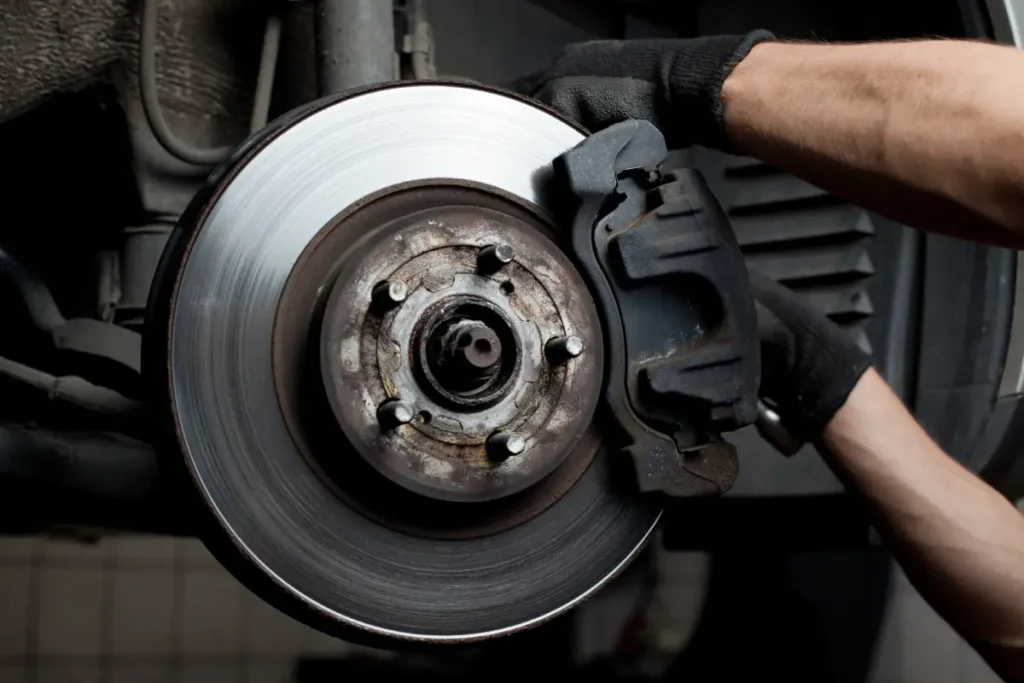
Worn brake pads are a common culprit for squeaky brakes. When the pads become too thin, brake squeaking is a warning to the driver that it’s time for a brake service. Prolonging this visit to your local brake shop can lead to damage down the line, including grinding, reduced stopping ability, and costly repairs. Replacing brake pads shortly after you hear this sound can help protect you and your car.
Classic warning signs for worn brake pads include:
- Hearing high-pitched squealing during braking.
- Having longer stopping distances.
- Grinding noises.
- Seeing brake warning lights on the dashboard.
- Noticing a reduction in braking responsiveness.
2. Moisture or Surface Rust
Do your brakes squeak in the morning or after it rains? If so, moisture is another potential cause. Overnight condensation can build up a layer of rust on brake rotors, causing temporary squeaking until the rust wears away after a few stops.
If this sound goes away soon after you drive, it’s not a reason to panic. However, persistent moisture-related noise can lead to corrosion. Regular brake maintenance may help catch this symptom before it becomes a major problem.
Common moisture-related brake issues include:
- Seeing temporary rust film.
- Living in humid conditions, including those Kentucky summers.
- Enduring rain exposure.
- Having an extended period of vehicle inactivity.
3. Buildup
Over time, debris, such as dust, dirt, gravel, or road salt, can accumulate between your brake pads and rotors. This situation can cause that annoying squeaking sound. A good brake cleaning can typically fix this problem.
Keeping your brakes clean is a vital part of long-term brake maintenance that we always recommend for drivers. Routine inspections can also catch trapped debris before it causes wear or damage.
4. Glazed Pads or Rotors
Repeated hard braking may cause brake pads or rotors to become glazed, meaning their surfaces harden and lose friction. This scenario is especially common in vehicles that frequently encounter stop-and-go traffic or steep downhill driving.
Fixing glazed components may require resurfacing rotors or replacing pads altogether.
Signs of glazing often include:
- Hearing constant squeaking.
- Having a reduction in braking power.
- Seeing smooth or shiny pad surfaces.
- Smelling overheating odors.
- Feeling vibration during braking.
Visit Our Brake Shop Near Lexington, KY, to Fix Your Squeaking Brakes
If your car’s brakes squeak when you brake, it doesn’t necessarily mean you have to get your brake pads replaced. At Powers Transmissions, we can help diagnose the issue and provide the necessary repairs. Our team uses top-quality parts and the latest technology to ensure your brakes perform at their best.
Whether it’s a simple pad replacement or a more complex system repair, you can count on us to get you back on the road safely. Contact us today!
Powers Transmissions has three convenient auto shop locations and proudly serves Central Kentucky, including Lexington, Nicholasville, Georgetown, Versailles, and Danville.