Vehicles can feel like one large jigsaw puzzle the deeper you look into them. For example, most drivers know the basics about their cars, including the main functions. Beyond that, many drivers have heard of certain vehicle systems, but don’t know their precise function or importance.
Take your catalytic converter, for example. Understanding this particular component can help you spot problems early and protect your vehicle long term. At Powers Transmissions, we believe informed vehicle owners make better decisions, which is why we break down everything you need to know when it comes to your catalytic converter.
What Are Catalytic Converters?
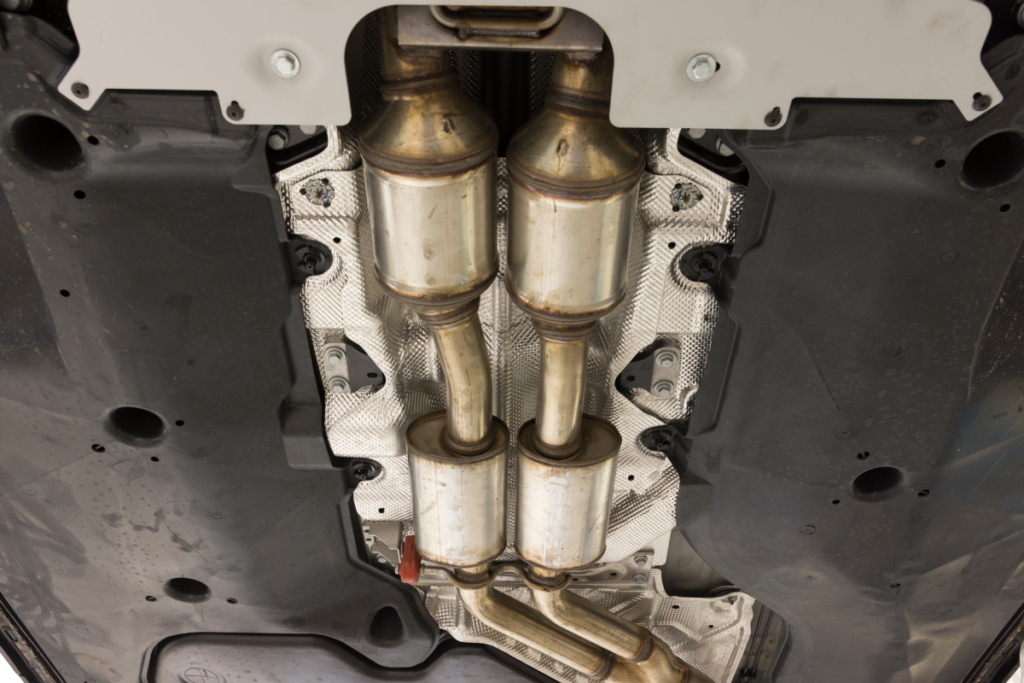
So, what are catalytic converters? A catalytic converter is a central component of a vehicle’s exhaust system. It’s designed to reduce harmful emissions before they exit the tailpipe. Exhaust gases leave the engine at an extremely high temperature and contain toxic compounds, such as carbon monoxide.
Inside the catalytic converter is a special material that triggers chemical reactions, converting these dangerous gases into less harmful substances before they’re released into the air. Without this process, vehicles would produce significantly more pollution and fail emissions requirements.
Why Are Catalytic Converters Important?
A healthy catalytic converter helps your engine run efficiently while keeping emissions within legal limits. When this part begins to fail, drivers may notice sluggish acceleration, reduced fuel efficiency, or dashboard warning lights come on.
In some cases, internal materials can break down, causing rattling noises. A clogged converter can even cause engine damage if left unchecked for too long. These potential consequences are why catalytic converter replacement or repair is not something to put off if you notice these signs.
Some common catalytic converter problems typically include:
- Internal breakdowns.
- Clogging.
- Contamination from engine problems, like oil or coolant leaks.
Should I Replace or Repair My Catalytic Converter?
While our team is happy to determine the answer to this question in our auto shop, it gives drivers peace of mind to know what to expect when we look at their vehicle. The good news is that not every issue requires a full catalytic converter replacement, but some do.
Minor issues like sensor faults or early performance changes may be repairable, but severe clogging, internal failure, or emissions failure usually mean replacement is the safest and most reliable option.
Find Catalytic Converter Repair Near Lexington, KY
Your car is a huge part of your life. Whether you’re traveling long distances to visit loved ones or just down the street to run an errand, you want your vehicle to operate smoothly. And when it doesn’t, you need a trusted team to get you back on the road swiftly and safely.
Our team at Powers Transmissions is family-owned and has been operating for over 48 years, putting integrity and quality work first. Our shop is equipped to handle heavy line work, which means we’re prepared for everything, including complex problems to minor fixes. If you’re searching for catalytic converter repair near Lexington, KY, contact us online or call (859) 887-8776.
Powers Transmissions has three locations throughout Lexington and Nicholasville, KY. We’re a local auto shop proudly serving Central Kentucky, including Lexington, Nicholasville, Georgetown, Versailles, and Danville, KY.