

Winchester, RD

859-253-3947

Lane Allen, RD

859-276-3638

Nicholasville

859-887-8776

Winchester, RD

859-253-3947

Lane Allen, RD

859-276-3638

Nicholasville

859-887-8776

Tire Rotation in Lexington, KY

Contact Us

Tire Rotation - Even Wear for Maximum Miles

Tom thought he was being smart by only replacing his two front tires when they wore out. Six months later, he was back buying two more tires because the rears were shot too. “If I’d just rotated them regularly,” he told us, “I could have gotten 60,000 miles out of all four instead of replacing them in pairs.” Regular tire rotation isn’t just maintenance – it’s money in your pocket.

Our Services

Contact Us

What Your Neighbors Are Saying About Us

Why Tire Rotation Matters

Your tires don’t wear evenly on their own. Front tires handle steering, braking, and often acceleration (in front-wheel drive cars), so they work harder than rear tires. Add in road crown, alignment issues, and different suspension components, and you’ve got a recipe for uneven wear.

Think of tire rotation like rotating crops on a farm. By moving tires to different positions, you spread the work around and help all four tires wear at the same rate. This means you can replace all four tires at once instead of dealing with constant tire purchases. 

Benefits of Regular Tire Rotation

  • Extended Tire Life: Properly rotated tires can last 20-30% longer than tires that stay in the same position. On a set of $800 tires, that’s real savings.
  • Better Traction: Even tread depth across all four tires means better grip, especially in rain or snow. Uneven wear creates different traction levels that can affect handling.
  • Improved Fuel Economy: Tires with uneven wear create more rolling resistance, which hurts gas mileage. Even wear keeps your car rolling efficiently.
  • Safer Driving: Consistent tire performance in all four corners means predictable handling and braking. You don’t want surprises when you need to stop quickly or avoid an obstacle.
  • Warranty Protection: Many tire manufacturers require regular rotation to maintain warranty coverage. Skip rotations, and you might void your tire warranty.

How Often Should You Rotate Tires?

Most tire manufacturers recommend rotation every 5,000 to 8,000 miles, which conveniently coincides with oil change intervals. Some people rotate tires every other oil change, but more frequent rotation is better for tire life.

Your driving habits affect rotation frequency. If you do a lot of highway driving, you can probably go longer between rotations. City driving with lots of turns, stops, and parking lot maneuvering is harder on tires and might require more frequent rotation.

Check your owner’s manual for manufacturer recommendations, but don’t let perfect be the enemy of good. Rotating every 6,000 miles is much better than never rotating at all.

Different Rotation Patterns

  • Forward Cross Pattern: For front-wheel drive vehicles, front tires move straight back, and rear tires cross to the front. This accounts for the extra work front tires do in FWD cars.
  • Rearward Cross Pattern: For rear-wheel and all-wheel drive vehicles, rear tires move straight forward, and front tires cross to the rear.
  • X-Pattern: All four tires change positions diagonally. This pattern works well for vehicles with the same size tires all around.
  • Directional Tires: Tires designed to roll in one direction can only be rotated front to back on the same side of the vehicle.
  • Different Size Tires: Some vehicles have different size tires front and rear. These can only be rotated side to side, if at all.

What We Check During Tire Rotation

When you bring your car in for tire rotation, our technicians do more than just move tires around:

  • Tire Pressure Check: We check and adjust pressure in all tires, including your spare. Proper pressure prevents premature wear and improves fuel economy.
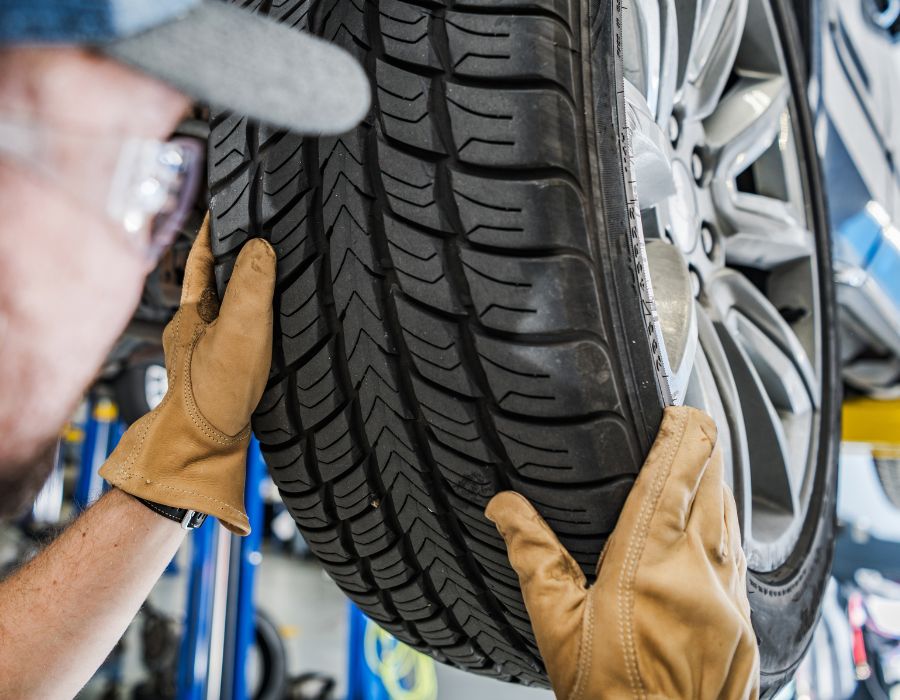
  • Tread Depth Measurement: We measure tread depth at multiple points on each tire to identify wear patterns and potential alignment issues.
  • Visual Inspection: We look for cuts, bulges, embedded objects, or other damage that could lead to tire failure.
  • Wheel Balance Check: If we notice vibration issues or irregular wear, we can check wheel balance and recommend balancing service.
  • Alignment Assessment: Unusual wear patterns often indicate alignment problems. We’ll let you know if your vehicle needs wheel alignment service.

Signs You Need Tire Rotation

  • Uneven Tread Wear: If your front tires look more worn than your rears, or if one side is wearing faster than the other, rotation can help even things out.
  • Vibration or Noise: Sometimes irregular wear causes vibration or road noise. Rotation might help, though you may also need wheel balancing or alignment.
  • It’s Been Too Long: If you can’t remember the last time you rotated your tires, it’s probably time. Check your records or ask us to look up your service history.
  • New Tire Purchase: If you’re buying new tires, that’s a perfect time to start a regular rotation schedule with your remaining tires.

Seasonal Tire Considerations

  • Winter Preparation: If you switch to winter tires, that’s a natural rotation opportunity. Make sure your winter tires are rotated for even wear too.
  • Spring Inspection: When switching back to summer tires, check wear patterns from the winter. Road salt and cold weather can affect tire wear.
  • Summer Road Trips: Before long vacation drives, rotation helps ensure all your tires are in their best condition for thousands of highway miles.

When Rotation Won't Help

Sometimes tire problems go beyond what rotation can fix:

  • Severe Wear: If one tire is significantly more worn than others, rotation won’t save it. You might need to replace tires in pairs or individually.
  • Alignment Issues: If your car pulls to one side or your steering wheel isn’t centered, you likely have alignment problems that rotation won’t fix.
  • Suspension Problems: Worn shocks, struts, or other suspension components can cause tire wear that rotation can’t prevent.
  • Tire Damage: Cuts, bulges, or other structural damage requires tire replacement, not rotation.

DIY vs Professional Rotation

While tire rotation seems simple, there are good reasons to have professionals handle it:

  • Proper Torque: Lug nuts need to be tightened to specific torque specifications. Too loose and wheels can come off; too tight and you can damage threads or warp rotors.
  • TPMS Sensors: Many modern vehicles have tire pressure monitoring systems that need to be reset after rotation.
  • Inspection Opportunity: Professional rotation includes inspection for problems you might miss at home.
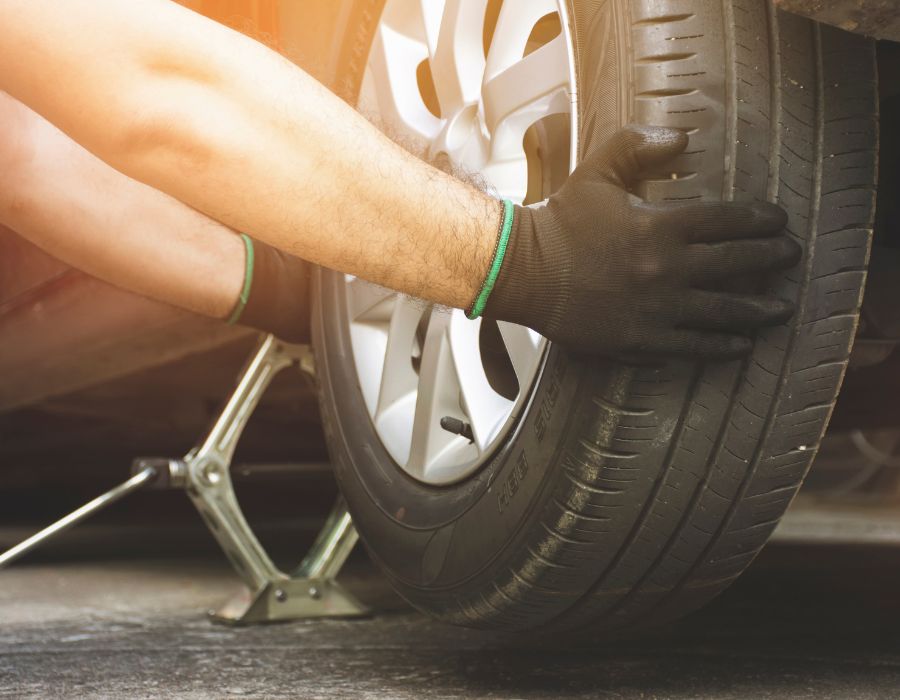
  • Lifting Safety: Properly lifting a vehicle requires the right equipment and knowledge of safe lifting points.

Cost vs Value of Tire Rotation

  • Tire rotation typically costs $50-100, depending on your vehicle. Compare that to replacing tires prematurely. If rotation extends tire life by 20,000 miles on a $800 set of tires, you’re saving $200-300 per rotation. Even accounting for the service cost, you’re still money ahead.
  • Plus, you get the safety benefits of even tire wear and the peace of mind that comes with professional inspection.

Why Choose Our Tire Rotation Service

We’ve been keeping vehicles rolling safely in this community for years. Our technicians know the correct rotation patterns for different vehicles and can spot tire problems before they become expensive failures.

We keep detailed records of your tire service, including tread depth measurements and wear patterns. This helps us track tire performance over time and catch developing problems early. We’ll also remind you when your next rotation is due.

Schedule Your Tire Rotation Today

Don’t wait until you need new tires to think about rotation. If it’s been more than 8,000 miles since your last rotation, or if you’re noticing uneven wear, give us a call. Regular tire rotation is one of the most cost-effective maintenance services you can perform on your vehicle. Your tires – and your wallet – will thank you.

Contact Us