As cars have grown increasingly sophisticated, more of their functions have come to rely on internal computers. While this advance makes them more difficult to work on, it also allows technicians to diagnose problems by reading error codes on onboard computers.
The more you understand about automotive computer functions and errors, the more easily you can grasp the meaning of computer codes and the repairs that address them. Discover some key points to get you started.
How Car Computers Detect Problems
Modern cars often contain multiple computers that share the burden of coordinating countless functions. When you think of a car computer, however, you most likely envision the unit that manages the engine systems and components. This unit performs such diverse tasks as regulating the ratio of oxygen to fuel, managing spark plug operations, and setting the idle speed.
The engine computer knows what to do because it constantly receives information from numerous sensors. Examples include the throttle position sensor, the oxygen sensor, and engine and air temperature sensors. If a sensor malfunctions, the missing or inaccurate information may lead the computer to send the wrong instructions to the engine, causing operational issues.
Other computers may regulate other aspects of your car’s operation. Some vehicles have dedicated computers for their automatic transmissions, anti-lock brakes, keyless entry systems, cruise control systems, digital radio systems, and other electronic components.
What Computer Codes Can Tell You
When a car’s computer detects a problem, it throws an on-board diagnostic (OBD) error code. Vehicles manufactured before 1996 most likely use the original OBD code system, while U.S. vehicles made after that date use the OBD-II system. The OBD-II standard includes an extensive list of alphanumeric codes, each of which indicates a specific type of error.
ODB-II codes P0100 through P0299 indicate a problem with fuel and air metering. Codes P0300 through P0399 point toward an ignition problem, while codes in the 400s represent auxiliary emissions control issues. P0500 through P0599 indicate speed or idle control errors. A code from P0600 through P0699 actually means that the computer has malfunctioned. Higher codes indicate transmission trouble.
How Auto Technicians Perform Computer Diagnostics
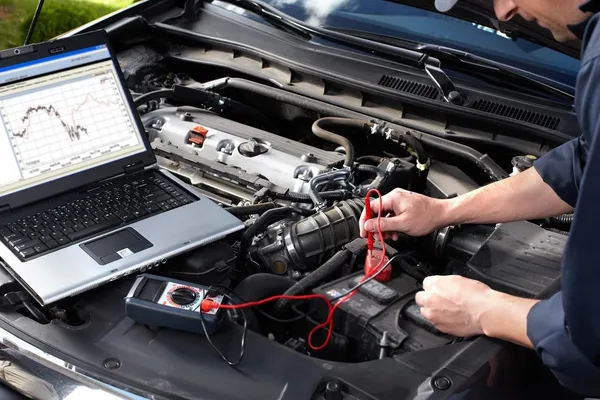
Cars using the OBD-II standard have a port, usually beneath the dashboard, that allows for an attachment to a code-reading device. An automotive technician plugs in the device and then runs the motor, watching for the codes to pop up on the device’s display. This general information helps the technician narrow the search for specific part failures or other problems.
You can purchase your own OBD-II code reader and plug it into your car when you want to get a better idea about why the vehicle is misbehaving. Keep in mind, however, that these general indicators will still need further evaluation by a skilled, experienced technician. Most drivers simply leave the computer diagnostic process to these professionals as part of the repair process.
When to Schedule a Diagnostic Inspection
If your car idles roughly, has difficulty accelerating as usual, experiences an unexplained drop in fuel efficiency, or fails to start at all (despite good battery voltage and connections), you may need to have its computer codes checked. Even if you don’t notice any obvious problems, a state inspection might reveal an error code thrown by your car’s computer.
If your check engine light comes on while you drive, take it as a signal that you need to service your car as soon as you can. While a solid light may not indicate an emergency, a flashing light indicates an urgent and immediate problem. In this situation, stop driving the car and have it towed to the auto shop for evaluation and any necessary repairs.
Powers Transmissions offers a variety of car care services, including computer diagnostic inspections, to help ensure your car’s ongoing safety and drivability. Contact us with your questions or problems.