As your car’s components undergo repeated use and its materials begin to wear out, a number of mechanical or electrical issues may develop. You can stay on top of these problems by understanding why they occur and what kinds of fixes you may need to authorize. Check out these four common age-related automotive issues.
1. Engine Wear
An internal combustion engine relies on the precise interactions among multiple moving parts for efficient operation. These parts operate within extremely tight tolerances to ensure optimal performance. However, they can also wear each down over time through a combination of heat and friction.
Cylinder wear can eventually cause a car engine to lose power. Countless up-and-down piston ring motion, with only a thin layer of oil separating the pistons from the walls of the cylinders, can widen the bore of each cylinder, reducing engine compression. Sludge buildup inside the engine also causes friction-related engine aging.
As some engine components age, they also face an increased risk of carbon fouling. Carbon deposits on spark plugs or pistons can produce noticeable engine knock. The engine may try to compensate for this problem by turning down its timing, which in turn causes power loss.
Engine wear commonly causes older vehicles to burn more oil than younger vehicles. Your service technician may recommend that you switch to an oil formulated for high-mileage engines. This type of oil contains extra ingredients to minimize friction and keep engine parts clean. Higher-viscosity oil can also help protect older engines.
2. Electrical Failures
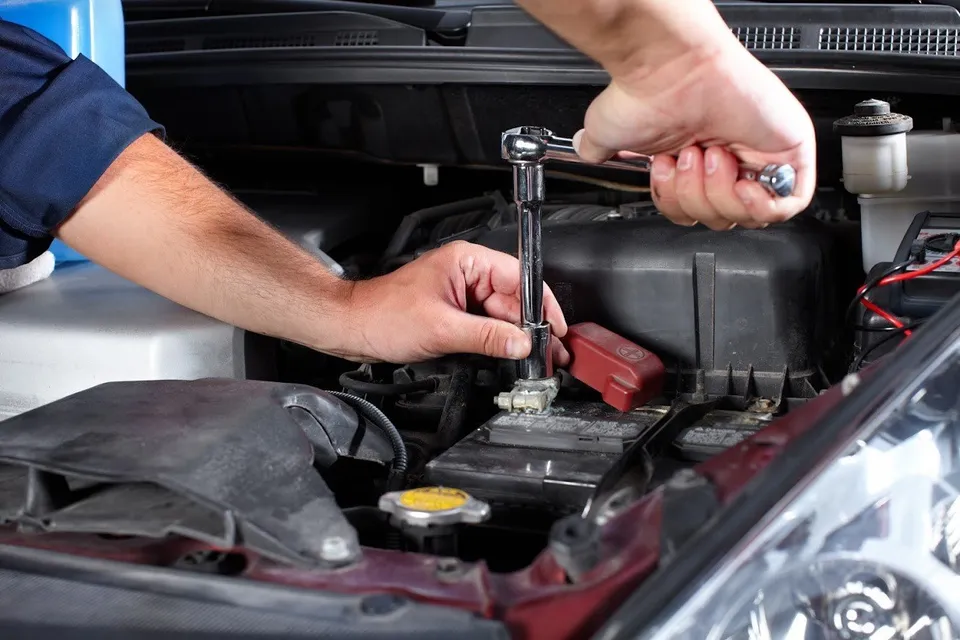
Some automotive electrical components age faster than others. A typical car battery, for example, may only last a maximum of five years before failing. Other components intended to last for the life of your car may succumb to numerous forms of wear and tear that eventually cause them to go bad.
A failed ground wire (the negative cable that attaches to the battery) often causes electrical issues in older cars. You may see your headlights flickering or running at reduced brightness, or your ignition may work only intermittently. Ground wire malfunctions can also shorten the lifespans of electrical motors and switches.
If your car has power windows, door locks, and other electrical options, one or more of these conveniences may fail over time. Possible reasons include worn-out motors or switches in the door or window units, fuses that have reached their end of life and need replacing, and wiring corrections that have become corroded.
3. Sagging Suspension
As a car gets older, its suspension may start to give out. Springs, coils, and other suspension components can stand up to normal wear and tear for many years, but sooner or later they will lose their ability to resist shifts in weight distribution or even maintain proper body height with the vehicle at rest.
You may notice changes in a car’s suspension while driving before you ever see a change in body height. For example, you may feel jostled by the car as you take sharp turns, speed up, or come to a stop. When you hit bumps, the suspension may bottom out, causing you and your passengers to bounce up and down uncomfortably.
Depending on what the source of the failure and what type of vehicle you have, your service technician may have to replace your front or rear coil springs, leaf springs, struts, bearing plates, or other suspension components. You should usually have such components replaced in pairs to help ensure that one side won’t fail before the other.
4. Fluid Leakage
Your car retains its various fluids within systems that include numerous gaskets, lines, pans, and other potential failure points. As the years go by, corrosion and deterioration can cause tiny leaks to form at any of these points. Your car may leak critical fluids to the point that operation becomes inefficient or even dangerous.
You can often identify the leak in question by the color of the fluid. For instance, dark-brown puddles often indicate old oil or brake fluid. Brightly-colored fluid usually means a coolant or transmission fluid leak.
Powers Transmissions can provide expert maintenance to keep your older car running well. Contact us today.